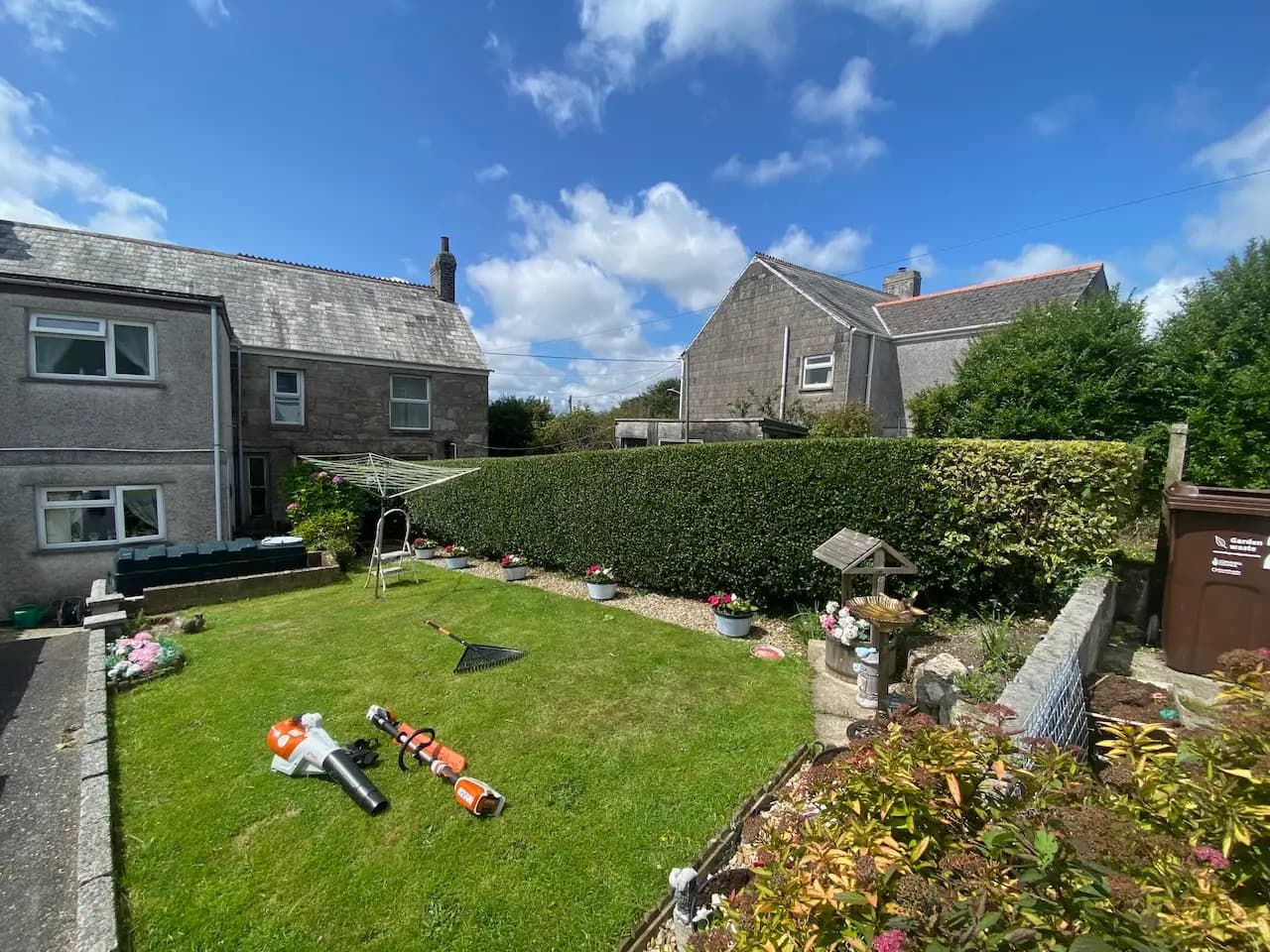
Cornwall Gardening Guide
Hedge Trimming in Cornwall: When, How Often and Cost
A practical guide to hedge trimming timing, frequency, nesting season, coastal growth and typical hedge cutting costs in Cornwall.
Want this handled for you?
If the job sounds bigger than a quick tidy, send the details and Levi will quote it.
Quick answer
In Cornwall, most domestic hedges need trimming once or twice a year, with fast-growing hedges sometimes needing a light tidy more often. The safest main trimming windows are usually late summer into autumn, after active bird nesting has passed, and late winter for some deciduous hedges before spring growth starts. Always check for nesting birds before cutting. Hedge trimming in Cornwall often costs £5 to £15 per metre, depending on height, thickness, access, shape and green waste. A low easy hedge is near the lower end. Tall conifers, wide hedges, awkward slopes, steps, narrow access and heavy waste push the price up. Coastal hedges around Newquay, Padstow, Perranporth and St Agnes may need more regular shaping because wind creates uneven growth. If a hedge is too high for safe domestic equipment, I will say so before quoting.
When to trim hedges in Cornwall
The right timing depends on the hedge species, the amount of growth and whether birds are nesting. As a general rule, I avoid heavy hedge cutting during the main nesting season unless I have checked carefully and the work is clearly safe. Light tidying may be possible in some situations, but the legal and ethical starting point is simple: do not disturb active nests.
Late summer and autumn are usually good windows for many domestic hedges because the main flush of growth has slowed and nesting risk is lower. Some deciduous hedges can be shaped in winter while dormant. Conifers need more care because cutting too hard into old brown wood can leave permanent bare patches. If a hedge has got badly out of shape, staged reduction is often safer than trying to fix everything in one aggressive cut.
- Always check for nesting birds before cutting.
- Late summer and autumn suit many domestic hedges.
- Avoid cutting conifers too hard into old brown growth.
Domestic hedge timing and decision guide
Use the hedge species, its condition and a fresh nest check together. A calendar date never overrides the legal protection for an active nest.
| Situation | Usual planning window | Before cutting | Reason |
|---|---|---|---|
| Routine trim on an established hedge | Often late summer after the main growth flush | Inspect carefully for active nests and confirm the species | Timing varies by hedge; maintenance trimming removes young growth |
| Formal fast-growing hedge | One to three light trims during active growth, species permitting | Check for nests before every visit | Lighter repeat cuts maintain a dense outline |
| Deciduous hedge renovation | Often during dormancy, depending on species | Identify the hedge and plan how much old wood it can tolerate | Many deciduous hedges respond better to renovation than conifers |
| Leylandii or another conifer | Trim green growth regularly and generally by late summer | Keep a green leafy surface | Most conifers do not regrow from old brown wood |
| Active nest found | Postpone the affected work | Do not damage, destroy or disturb a nest in use | Wild birds, eggs and nests in use are protected by law |
How often hedges need trimming
Most domestic hedges in Cornwall need trimming once or twice a year. Formal hedges, front boundaries and holiday-let gardens often benefit from two visits because presentation matters and growth is obvious from the road. Informal hedges may only need one tidy cut a year if they have enough space and are not blocking paths, windows or driveways.
Cornwall's mild climate extends the growing season, so hedges can push growth for longer than people expect. Coastal hedges also grow unevenly. The windward side can be scorched and slower, while the sheltered side grows thick and heavy. A good trim accounts for that pattern rather than blindly cutting every face the same. Regular lighter cuts usually look better and create less waste than waiting until the hedge is too large.
How much hedge trimming costs
Hedge trimming in Cornwall often falls between £5 and £15 per metre, but that is my planning range rather than an official tariff. It only makes sense once height, thickness and access are known. A low front hedge with easy access, little waste and a simple shape is quick. A tall Leylandii hedge, a wide boundary hedge, or a hedge above a slope or wall takes much longer and may require more equipment, more careful working and more waste removal.
Green waste is a major part of hedge work. A tidy-looking hedge can produce a surprising amount of cut material, especially if it has not been maintained for a year or two. Bagging, carrying and disposing of the waste properly takes time. I confirm whether waste removal is included before work starts so the quote is clear.
Coastal hedges need different care
Hedges near the coast have to deal with salt wind, fast-draining soil and storm damage. Around Newquay, Perranporth, St Agnes, Padstow and St Ives, I often see hedges that are thin or scorched on the seaward side but thick on the sheltered side. Cutting too hard on the damaged face can make the hedge look worse, so the aim is often to balance shape while keeping enough healthy growth.
Species choice matters too. Griselinia, escallonia, olearia and tamarisk cope with coastal exposure better than many standard hedging choices. If an existing hedge is struggling every winter, repeated trimming will not solve the underlying problem. It may need shelter, feeding, better soil, replacement sections or a more realistic shape.
What to do with an overgrown hedge
An overgrown hedge usually needs a plan, not a panic cut. If the hedge is blocking a path or driveway, the priority is safe clearance. If it has become too tall, reduction may need to happen in stages, especially with conifers. Some hedges respond well to hard renovation. Others do not. Before cutting heavily, identify the species and check how it responds to old-wood pruning.
For customers, the most useful thing is to send photos from both sides if possible. Include the length, approximate height, access route and what you want changed. Do you want the hedge lower, narrower, tidier, or simply made safe? Those are different jobs. A clear brief makes the quote more accurate and the finished shape better.
How to keep hedge costs down
The cheapest hedge to trim is the one that has not got away from you. Regular maintenance keeps the growth soft, reduces waste and avoids heavy reduction work. If a hedge matters for privacy, regular trimming also keeps it dense. Letting it grow too tall can create bare lower sections, unstable top growth and a much bigger bill later.
Keep access clear where you can. Move pots, furniture and bins away from the hedge before the visit. Tell your gardener about hidden wire, uneven ground, old stumps or fragile plants underneath. If waste removal is not needed because you compost on site, say so at quote stage. Small bits of preparation can save time, and time is what most garden work is priced around.
Quick questions
Can hedges be cut during nesting season?
Only if active nests are not disturbed. I always check before cutting and avoid heavy hedge work where nesting birds may be present.
How often should Leylandii be trimmed?
Leylandii usually needs trimming once or twice a year to stay manageable. It should not be cut hard into old brown wood because it may not regrow properly.
Why is hedge trimming sometimes expensive?
Height, thickness, access, safety and waste handling all add time. Tall or neglected hedges create much more waste and often need more careful cutting.
About the author

Written by
Levi Quilliam
Founder & Lead Gardener, Quilliams Gardening & Landscaping
I'm a Cornwall-based gardener and landscaper working across Newquay and the surrounding villages of north Cornwall. Public liability insured, Environment Agency registered waste carrier (lower tier), CBDL582202, and a registered limited company (Companies House 16405915). I write these guides from real jobs on Cornish gardens.
More about LeviNeed a hand with your own garden?
I cover Newquay, St Columb Major, Padstow, Wadebridge and the surrounding north Cornwall villages. Send a few details and I'll come back with a clear, fixed quote, usually within 24 hours.