Cornwall Gardening Guide
Low-Maintenance Garden Ideas for Cornwall's Coastal Climate
Practical ideas for easier Cornwall gardens, including gravel areas, mulch, hardy planting, simpler edges and maintenance plans that survive coastal weather.
Want this handled for you?
If the job sounds bigger than a quick tidy, send the details and Levi will quote it.
Quick answer
The best low-maintenance garden ideas for Cornwall are gravel areas with proper ground preparation, simple lawn shapes, mulched beds, tough coastal planting, clear edging and a realistic maintenance schedule. Gravel gardens work well when the base is cleared properly, membrane is pinned carefully, and the planting is chosen for wind, salt and drainage. Mulch reduces weeds and helps soil hold moisture. Simple lawn edges cut mowing time. Hardy shrubs like griselinia, escallonia, hebes, cistus, rosemary, lavender and phormiums used sparingly usually cope better than fussy bedding plants. Low maintenance does not mean no maintenance. It means fewer weak points, less wasted effort and a garden that can handle Cornwall's mild wet winters, coastal wind and long growing season. I usually start by removing awkward shapes and choosing materials that still look intentional between visits.
Start with the layout, not the plant list
Low-maintenance gardens are won or lost in the layout. A complicated lawn shape with awkward corners, tiny strips of grass and unclear bed edges takes longer to maintain than a simple rectangle or sweeping curve. Beds that are too narrow dry out quickly, fill with weeds and make planting look bitty. Paths that are too tight become annoying every time you carry tools, bins or bags of green waste.
When I look at a garden, I ask what can be simplified. Can the lawn edge be cleaner? Can a dead corner become gravel or mulch? Can overgrown shrubs be reduced or replaced with fewer, tougher plants? Can the main route through the garden stay clear all year? These decisions do more for maintenance than buying one miracle plant.
Use gravel properly
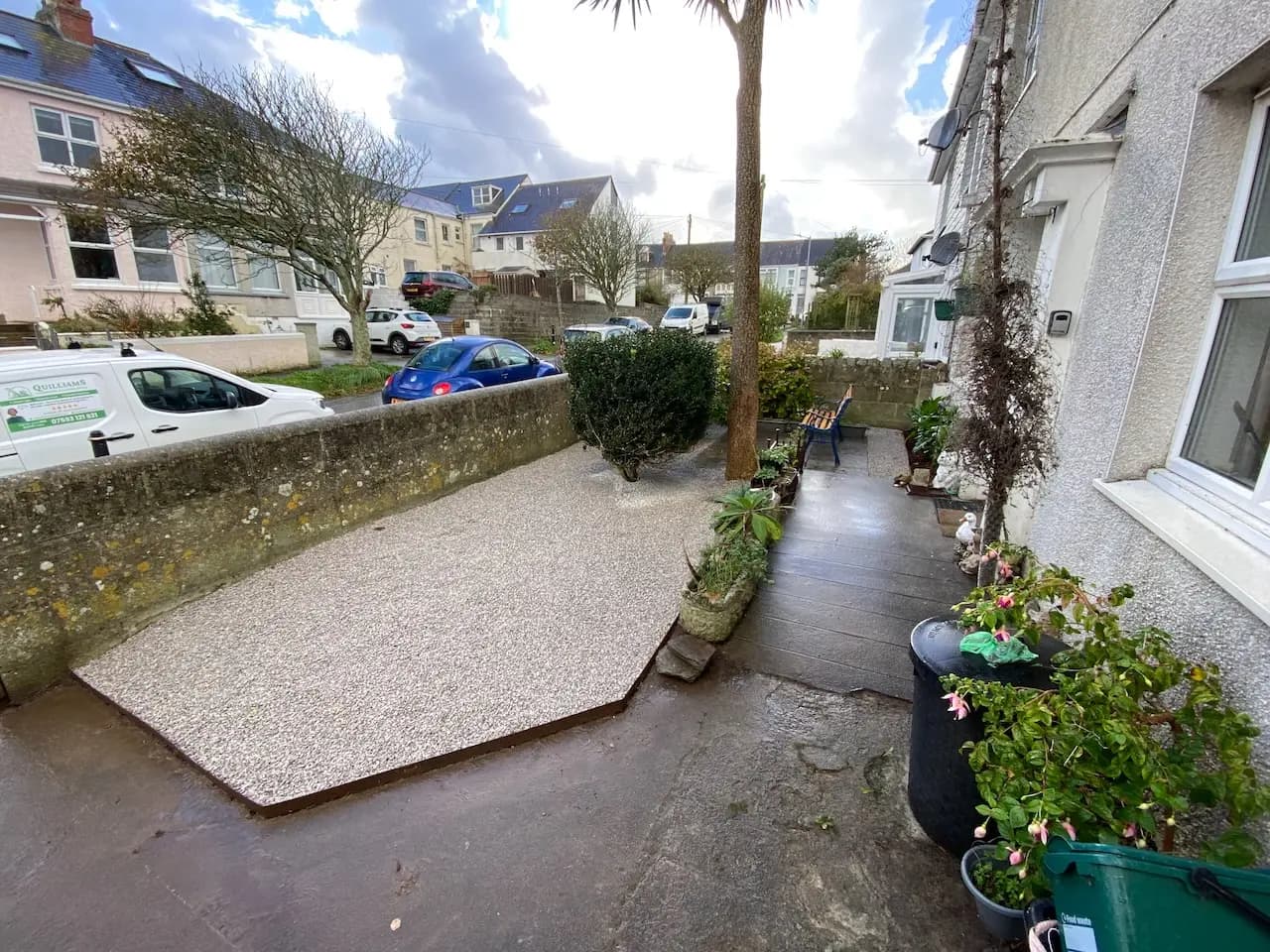
Gravel gardens can be excellent in Cornwall, but only when the preparation is right. The ground needs to be cleared properly, perennial weeds dealt with, levels considered, membrane pinned well, and edging installed where needed. If gravel is thrown onto weedy soil without preparation, it becomes a messy weed bed with stones in it.
The best gravel areas have a clear purpose. They might replace a tired front lawn, create a dry path to bins, make a seating area, or reduce the amount of wet grass near a doorway. Gravel also suits coastal planting because many salt and wind tolerant plants prefer free-draining soil. I like combining gravel with tough shrubs, repeated planting groups and clean edges so it looks intentional rather than unfinished.
Mulch beds to reduce weeds
Mulch is one of the simplest ways to reduce garden work. Organic mulch helps improve soil structure, keeps moisture in and suppresses many annual weeds. Gravel mulch suits drier coastal beds and can look clean around Mediterranean-style planting. Bark, composted material, gravel and decorative stone all have their place, but the best choice depends on the bed, the plants and the look you want.
Before mulching, clear weeds properly and define the bed edge. Mulch is not magic if it goes over a mess. A good layer makes future weeding quicker because new weeds are easier to pull and the soil surface is protected. In Cornwall's mild damp climate, mulch also helps reduce bare soil where weeds would otherwise germinate for much of the year.
Choose fewer, tougher plants
A low-maintenance garden usually looks better with fewer plant types repeated well. One of everything can feel exciting at the garden centre, but it often becomes harder to care for because every plant has different needs. In exposed Cornwall gardens, I prefer tough shrubs and perennials that suit the site: griselinia, escallonia, hebes, cistus, rosemary, lavender, agapanthus, hardy geraniums and ornamental grasses used carefully.
The right plant in the right place is lower maintenance than constant watering, feeding and replacing. Shade, wind, salt and drainage matter. A plant that thrives in a sheltered Truro courtyard may struggle on an exposed Newquay boundary. If the garden is near the coast, choose plants with proven coastal tolerance rather than hoping delicate plants will toughen up.
Make edges easy to maintain
Edges are where gardens start to look messy. Grass creeps into beds, gravel spills into lawns, soil washes onto paths, and weeds establish in cracks. Clear edging makes mowing, strimming and weeding quicker. It also makes the garden look sharper even when the planting is simple.
Edging does not have to be expensive. Timber, metal, stone, brick, setts or a clean spade-cut edge can all work depending on the garden. The key is choosing an edge that suits the job. A gravel area needs a physical edge to hold material in place. A lawn border needs a line that can be cut cleanly. A path needs enough separation that soil and mulch do not constantly wash across it.
Use a realistic maintenance plan
Low maintenance still needs maintenance. In Cornwall, gardens grow for too much of the year to be ignored completely. A fortnightly visit through the growing season can keep a garden under control with less effort than a big rescue every few months. For some gardens, a monthly winter check is enough. For holiday lets, timing around guest changeovers matters more than a standard schedule.
The aim is to prevent problems from becoming expensive. Keep lawns at a sensible height, trim hedges before they become a major reduction job, weed beds before roots establish, and clear leaves before they sit wet on paths. A simple garden maintained regularly almost always costs less, looks better and causes less stress.
Quick questions
Are gravel gardens low maintenance?
Yes, if they are prepared properly. The ground needs clearing, membrane, secure edges and suitable planting. Poorly prepared gravel still gets weeds.
What is the easiest garden surface to maintain?
Gravel, paving and simple lawns can all be easy if installed and edged properly. The best choice depends on how you use the space and how exposed the garden is.
What plants are low maintenance near the coast?
Hebes, cistus, rosemary, lavender, agapanthus, griselinia, escallonia and selected ornamental grasses can work well when matched to soil, sun and exposure.
About the author

Written by
Levi Quilliam
Founder & Lead Gardener, Quilliams Gardening & Landscaping
I'm a Cornwall-based gardener and landscaper working across Newquay and the surrounding villages of north Cornwall. Public liability insured, Environment Agency registered waste carrier (lower tier), CBDL582202, and a registered limited company (Companies House 16405915). I write these guides from real jobs on Cornish gardens.
More about LeviNeed a hand with your own garden?
I cover Newquay, St Columb Major, Padstow, Wadebridge and the surrounding north Cornwall villages. Send a few details and I'll come back with a clear, fixed quote, usually within 24 hours.