Cornwall Gardening Guide
How to Remove an Established Pampas Grass
A practical guide to removing large pampas grass safely, including cutting back, digging out roots, waste handling and what to plant afterwards.
Want this handled for you?
If the job sounds bigger than a quick tidy, send the details and Levi will quote it.
Quick answer
To remove an established pampas grass, cut the leaves back first, tie or bundle the sharp foliage, expose the crown, then dig around and under the root mass until it can be levered out in sections. Wear thick gloves, long sleeves and eye protection because pampas leaves are sharp. Do not just cut it to ground level and leave the crown unless you are prepared for regrowth. Large plants can be heavy, awkward and full of trapped debris, so waste handling is often the hardest part. In Cornwall gardens, I often replace old pampas with gravel, low-maintenance planting, hardy shrubs or a cleaner patio edge. If the clump is mature, close to structures, or difficult to access, it is usually worth getting help. Allow more time than you expect, especially where roots have grown through stone, membrane, or old rubble.
Why established pampas grass is hard to remove
Pampas grass looks light and feathery from a distance, but an established clump is a serious plant. The leaves are sharp, the crown is dense, and the root mass can be surprisingly heavy. In Cornwall's mild climate, pampas can grow strongly for years without being checked, especially in sunny front gardens and exposed coastal plots where it tolerates wind better than softer planting.
The problem is not only the height. It is the bulk at the base. A mature clump can trap dead leaves, soil, old stems and rubbish, creating a tight mass that is awkward to cut and lift. If the plant is close to a wall, fence, path, patio or driveway, you also need to work carefully so you do not damage the surrounding surfaces while levering the crown out.
- Pampas leaves are sharp and can cut bare skin.
- The crown and root mass can be heavy and awkward.
- Cutting it flat without removing the crown can allow regrowth.
Start with safety and access
Before cutting anything, check the access around the plant. Make sure you have room to work, a clear route for carrying waste, and a safe place to stack cut material. Wear thick gloves, long sleeves, sturdy footwear and eye protection. Pampas leaves can slice skin, and dry stems can flick back while cutting. If the plant is wet, it will be heavier and messier to move.
I usually start by tying sections of the foliage where possible, then cutting back in manageable bundles. Trying to attack the whole plant at once creates a huge pile of sharp leaves and makes the base harder to see. Work gradually. Once the top growth is reduced, you can see the crown, the surrounding ground and any obstacles hidden inside the clump.
Cut back the foliage in stages
Cutting back is not the same as removing the plant. It is the preparation stage. Use suitable tools for the size of the clump: secateurs for small stems, loppers for thicker growth, and a saw or powered tool where appropriate. Keep the cut material in bundles so it is easier to carry and dispose of. Do not leave sharp leaves loose across paths or lawns where someone can kneel or step into them later.
Once the foliage is reduced, clear around the base. You need to expose the crown and the ground line. This is where you can judge how much digging is needed. If the clump has been there for years, expect the root mass to be wider and tougher than it first looks. Patience at this stage saves a lot of frustration.
Dig out the crown and root mass
The key to permanent removal is getting the crown out. Dig around the plant with a sharp spade, working a trench around the root mass. Then start cutting under it and levering sections loose. Very large clumps may need to come out in pieces rather than as one lump. That is normal. The aim is to remove the growing crown and as much root as practical.
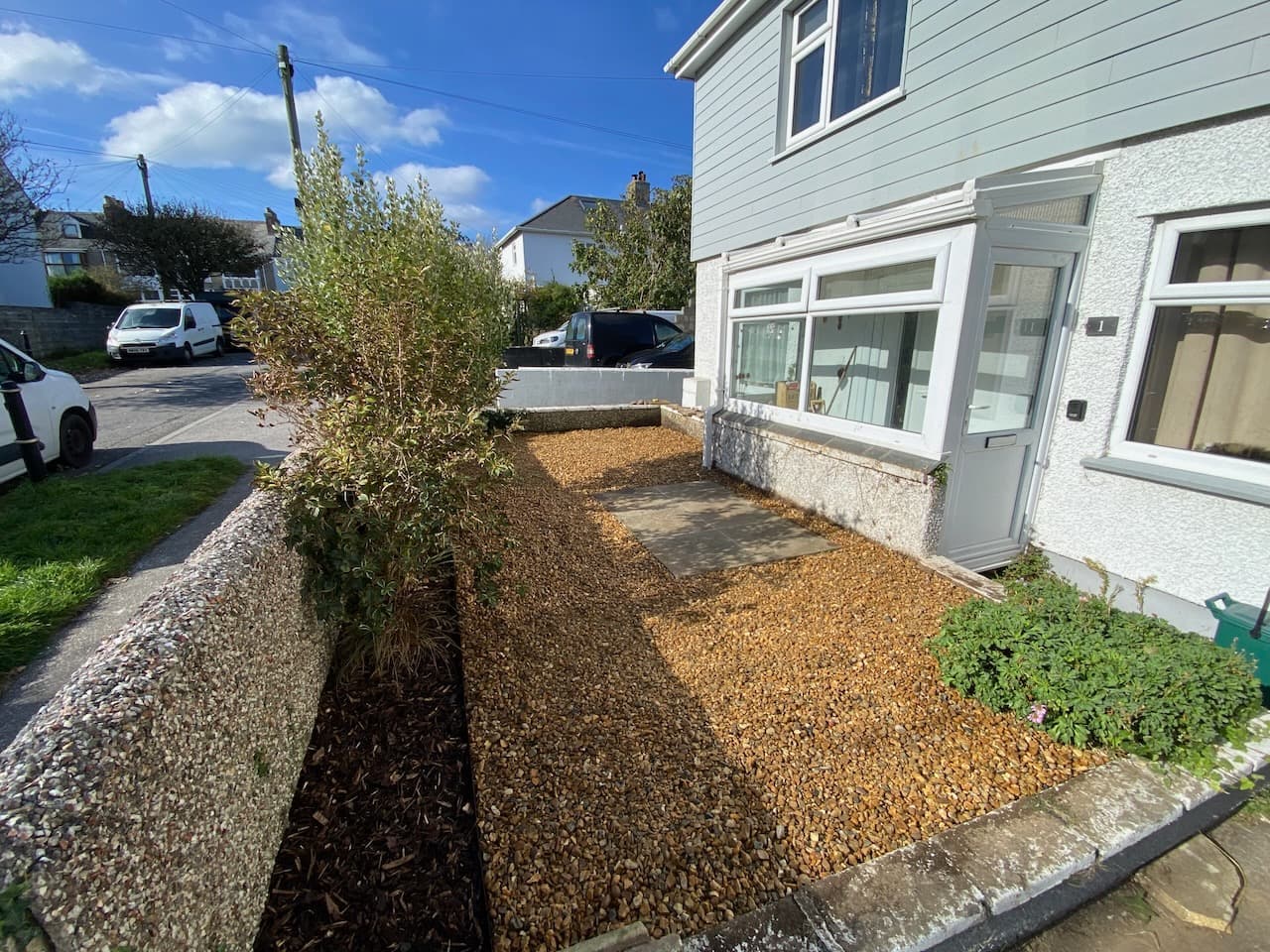
Be careful with underground services, irrigation pipes, edging, membranes and patio bases. If the pampas is growing in a gravel garden or near paving, you may need to peel materials back, remove the plant, then rebuild the area properly. In one Newquay project, I removed a large pampas, cleared the ground, installed membrane and gravel, and added a patio area so the space became usable rather than just empty.
Plan the waste before you start
Pampas removal creates more waste than most people expect. The leaves are bulky, the stems are awkward, and the root mass can be heavy with soil. If you are doing it yourself, check your local waste options first and make sure you can transport everything safely. Do not overfill bags to the point where they split or become dangerous to lift.
Quilliams is an Environment Agency registered waste carrier (lower tier), CBDL582202. For customers, handling the material is often the part that makes professional removal worthwhile. Cutting the plant down is one thing. Bagging, carrying and loading it is where a quick weekend job can become a long and unpleasant one; the quote should also make the agreed disposal route and charge clear.
What to do with the space afterwards
Once the pampas is gone, you have a chance to make the garden more useful. If the old plant dominated a front garden, a gravel garden with edging and a few tough shrubs can be much easier to maintain. If the space is near a seating area, a patio extension or stepping stones may make more sense. If you still want height and movement, choose smaller grasses or shrubs that will not take over the whole bed.
In Cornwall, I often recommend low-maintenance coastal planting after pampas removal: hebes, cistus, phormiums used sparingly, rosemary, lavender, griselinia or escallonia depending on the spot. The best replacement depends on wind, soil, sun and how much time you want to spend maintaining it.
Quick questions
Will pampas grass grow back if I cut it down?
Yes, it can grow back if the crown is left in place. Cutting down the leaves only reduces the top growth. For proper removal, the crown and as much of the root mass as practical should come out.
Is pampas grass dangerous to remove?
It can be. The leaves are sharp and large clumps are heavy. Wear gloves, long sleeves and eye protection, and get help if the plant is mature or awkward to access.
What can replace pampas grass?
Low-maintenance replacements include gravel planting, hebes, cistus, rosemary, lavender, smaller ornamental grasses, phormiums used carefully, or a clean patio edge.
About the author

Written by
Levi Quilliam
Founder & Lead Gardener, Quilliams Gardening & Landscaping
I'm a Cornwall-based gardener and landscaper working across Newquay and the surrounding villages of north Cornwall. Public liability insured, Environment Agency registered waste carrier (lower tier), CBDL582202, and a registered limited company (Companies House 16405915). I write these guides from real jobs on Cornish gardens.
More about LeviNeed a hand with your own garden?
I cover Newquay, St Columb Major, Padstow, Wadebridge and the surrounding north Cornwall villages. Send a few details and I'll come back with a clear, fixed quote, usually within 24 hours.